Best Small Tablets with 8-Inch Screens: Samsung vs Lenovo vs Amazon vs HONOR
Small tablets have a useful place in the market. They are easier to carry around than a conventional 10 or 11-inch tablet, comfortable to hold for reading, and large enough for browsing the web, watching YouTube, checking emails and running everyday apps.
The problem is choosing one. Samsung, Lenovo, Amazon and HONOR all have compact Android tablets with screens measuring around 8.7 inches. On paper, several look remarkably similar, with HD displays, 4GB RAM and 64GB or 128GB storage. Look closer, though, and there are some important differences in processing power, screen refresh rates, battery capacity, software and expandability.
I’ve picked six configurations worth considering, including the Samsung Galaxy Tab A9, newer Galaxy Tab A11, Lenovo Tab One, Amazon’s new Alexa Tablet 8 and HONOR Pad X7. There are also higher-memory versions of some models for anyone who wants more room for multitasking.
One interesting development is Amazon’s choice of processor. Its new Alexa Tablet 8 uses the MediaTek Kompanio 540, with newer Cortex-A78 CPU cores than the popular Helio G99 found in both Samsung tablets. This makes Amazon’s offering a more serious competitor than its entry-level positioning might suggest.
So which small tablet offers the best value, and which one should you buy?
Quick comparison: Six compact tablets
Here are the main specifications to consider before looking at each tablet in more detail.
|
Tablet |
Display |
Processor |
RAM |
Storage |
|
Samsung Galaxy Tab A9 |
8.7″, 60Hz |
MediaTek Helio G99 |
4GB |
64GB |
|
Lenovo Tab One |
8.7″, 60Hz |
MediaTek Helio G85 |
4GB |
64GB / 128GB |
|
Amazon Alexa Tablet 8 |
8.7″, 60Hz |
MediaTek Kompanio 540 |
4GB |
64GB / 128GB |
|
Amazon Alexa Tablet 8 (higher spec) |
8.7″, 60Hz |
MediaTek Kompanio 540 |
8GB |
128GB |
|
Samsung Galaxy Tab A11 |
8.7″, 90Hz |
MediaTek Helio G99 |
4GB / 8GB |
64GB / 128GB |
|
HONOR Pad X7 |
8.7″, 90Hz |
Qualcomm Snapdragon 680 |
4GB |
128GB |
NOTE: The 8GB Amazon configuration is based on the separate product listing. Check the precise model and specification before ordering.
All six tablets use an HD-class 1340 x 800 resolution. None offers a Full HD display, so expectations should be realistic when watching high-resolution video or reading small text.
The Samsung Galaxy Tab A11 and HONOR Pad X7 have the advantage of 90Hz refresh rates, making scrolling and navigation look smoother than on the 60Hz alternatives.
1. Samsung Galaxy Tab A9: A familiar compact Android tablet
The Samsung Galaxy Tab A9 remains an attractive option for anyone looking for a small Android tablet from an established manufacturer.
It has an 8.7-inch TFT LCD display with a resolution of 1340 x 800 pixels and a conventional 60Hz refresh rate. Inside is a MediaTek Helio G99 processor, paired with 4GB RAM and 64GB storage in the configuration being considered.
The Helio G99 is a capable entry-level tablet processor. Its two Cortex-A76 performance cores and six Cortex-A55 efficiency cores provide enough processing power for everyday activities such as browsing, video streaming, email, social media and light gaming.
It also offers considerably more processing headroom than the Helio G85 found in the Lenovo Tab One.
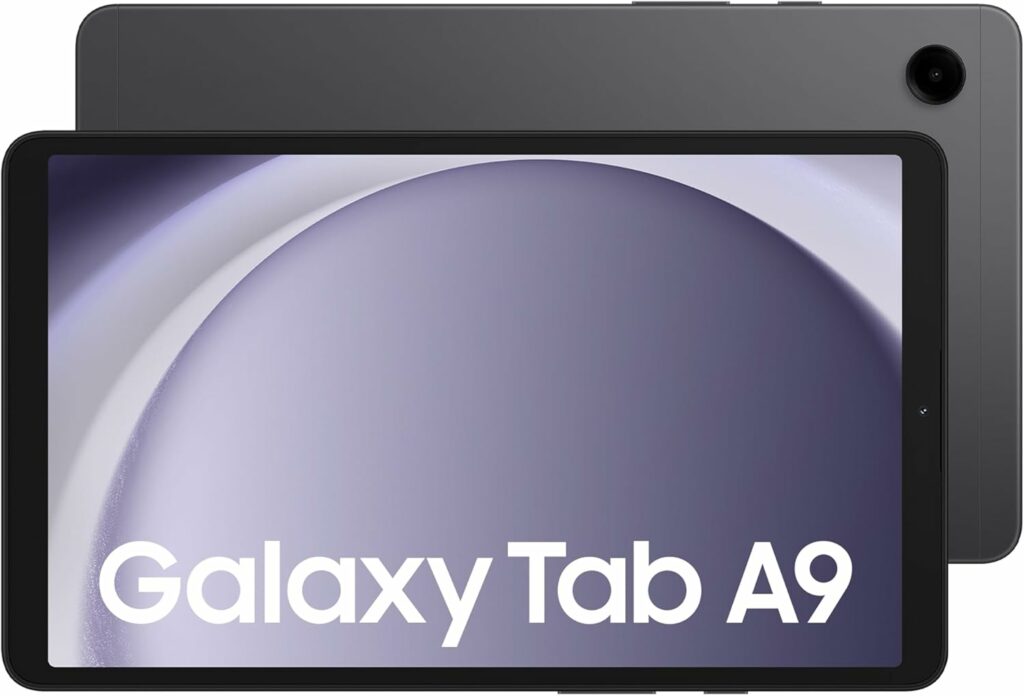
Samsung’s One UI software is another attraction. The interface is familiar to anyone already using a Samsung smartphone, and features such as Samsung SmartThings and Samsung’s connected-device ecosystem make it a convenient addition to a Samsung household.
Storage can be expanded using a microSD card, which is useful if you intend to keep downloaded films, music, photographs and documents on the device.
There are a couple of things to consider before buying. The 60Hz screen is fairly ordinary, and the 4GB RAM configuration is modest for someone who regularly switches between several applications. It is also worth remembering that the Galaxy Tab A9 originally launched in 2023. A current Amazon listing should not be mistaken for a newly released tablet.
Best for: Samsung users looking for an affordable, familiar Android tablet for everyday entertainment and browsing.
See Samsung Galaxy Tab A9 on Amazon.
2. Lenovo Tab One: A straightforward tablet for everyday use
The Lenovo Tab One is another compact Android tablet, with an 8.7-inch IPS display and MediaTek Helio G85 processor.
Its specifications include 4GB RAM, with a choice of 64GB or 128GB internal storage. This makes the 128GB version particularly appealing if you intend to download applications, store photographs or keep entertainment available offline.
The Helio G85 is an older budget processor, originally introduced in 2020. It uses two Cortex-A75 performance cores and six Cortex-A55 efficiency cores, manufactured using a 12nm process.
It is suitable for everyday applications, web browsing and streaming. However, it offers noticeably less processing power than the Helio G99 and Kompanio 540. Demanding games and heavier multitasking are outside its comfort zone.
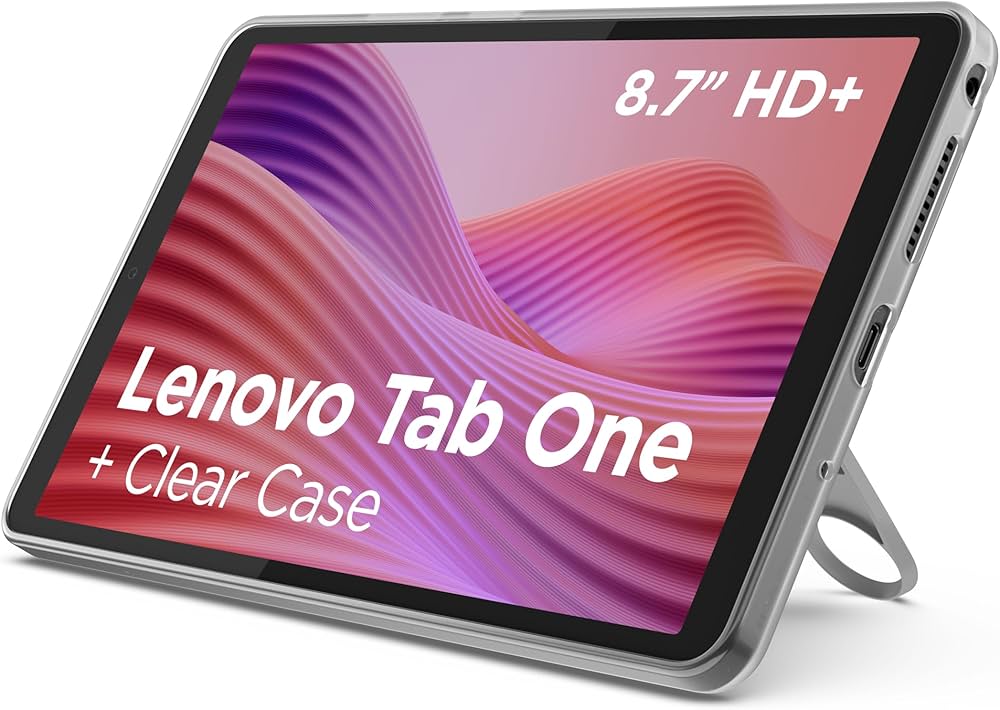
The display has a resolution of 1340 x 800 pixels and a 60Hz refresh rate. Lenovo quotes brightness of up to 480 nits, which is useful when using the tablet in a reasonably bright room. One of its advantages is its audio system. The Lenovo Tab One has two side-firing speakers optimised with Dolby Atmos, providing stereo sound for watching films and television programmes.
The 5,100mAh battery is another practical feature. Lenovo quotes up to 12.5 hours of YouTube video playback and up to 16.5 hours of Chrome browsing under its testing conditions. There is also a microSD card slot supporting cards up to 1TB, allowing you to expand storage beyond the built-in 64GB or 128GB.
One area deserves attention before purchasing: software support. Lenovo’s published specifications indicate security updates through January 2027. That leaves relatively little remaining support time when buying in late 2026. This is worth considering if you intend to keep your tablet for several years.
Best for: Casual browsing, reading, streaming and family use, particularly if you find the 128GB version at a competitive price.
See Lenovo Tab One on Amazon.
3. Amazon Alexa Tablet 8: A surprisingly capable processor
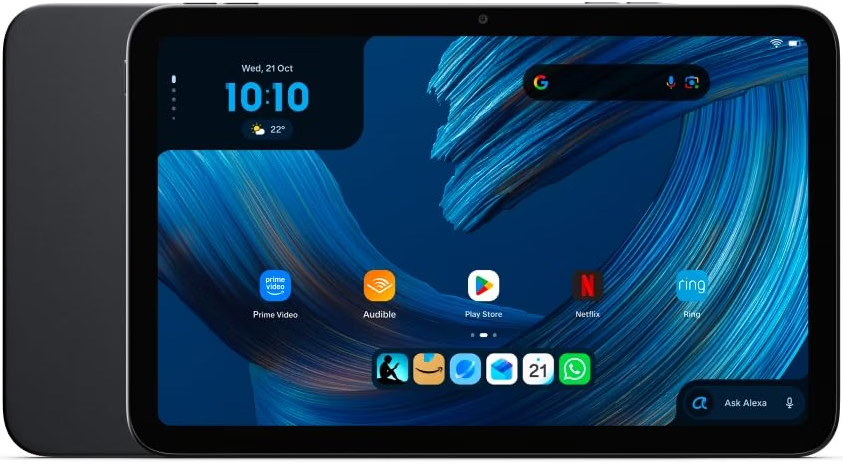
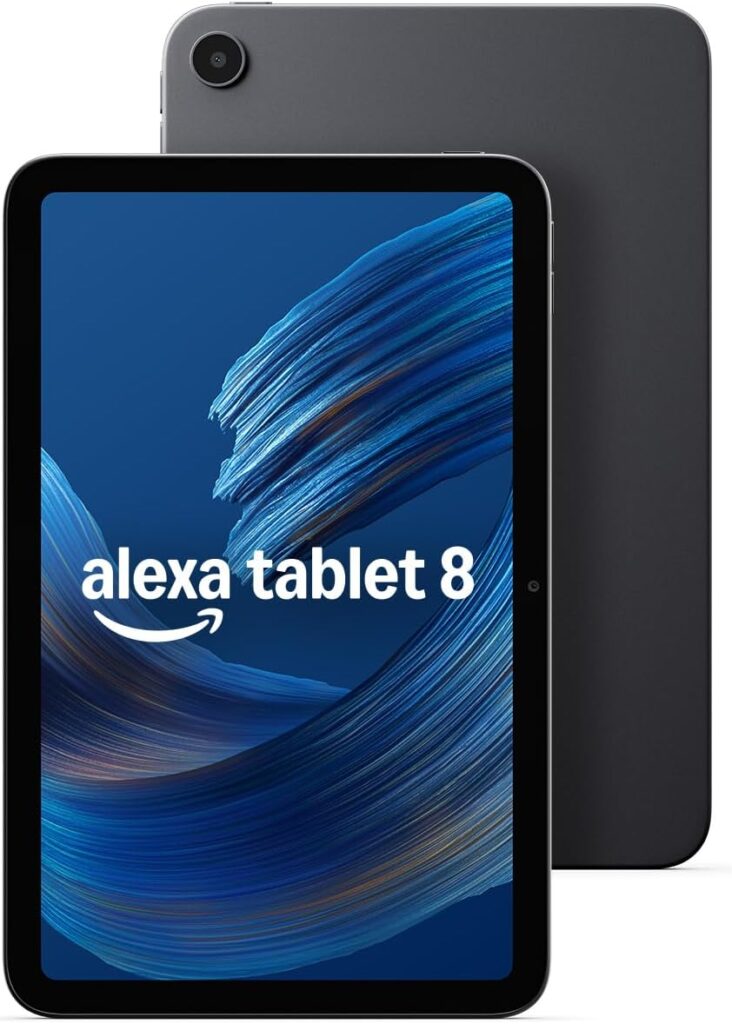
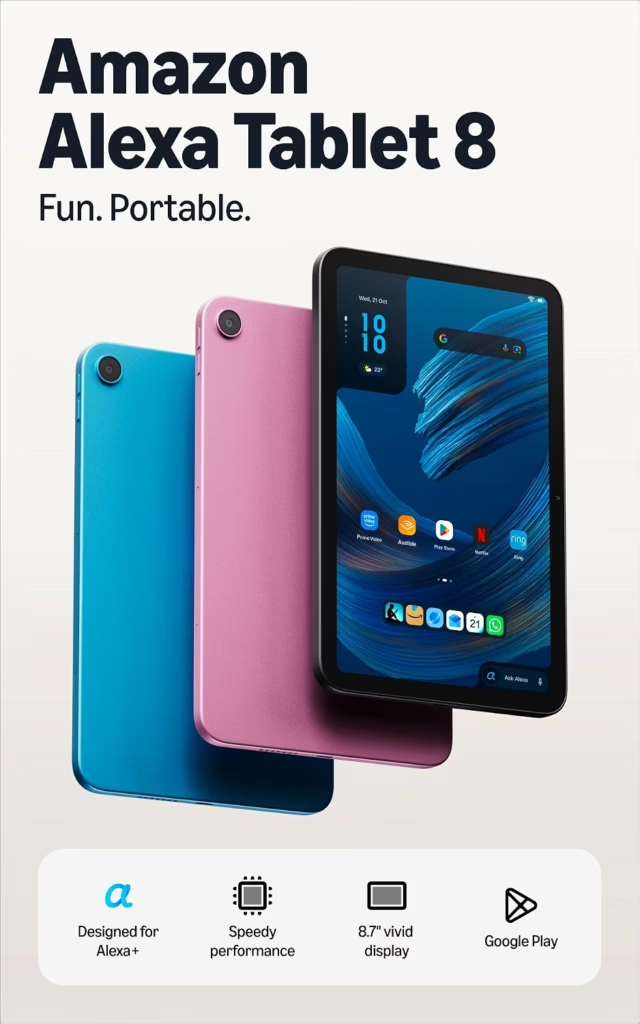
Amazon’s new Alexa Tablet 8 is an interesting addition to the compact tablet market. The name might suggest an 8-inch device, but it actually has an 8.7-inch display, matching the screen size of the Samsung, Lenovo and HONOR alternatives.
The tablet is designed around Amazon’s Alexa+ assistant, bringing conversational AI features into a portable Android device. Its specifications include a MediaTek Kompanio 540 processor (MT8189), 4GB RAM and either 64GB or 128GB internal storage, depending on the version purchased.
This processor deserves particular attention. It uses two ARM Cortex-A78 performance cores running at up to 2.0GHz and six Cortex-A55 efficiency cores, also running at up to 2.0GHz. The Cortex-A78 is a newer CPU architecture than the Cortex-A76 used in Samsung’s Helio G99. This gives the Amazon tablet an interesting advantage in single-core processing performance.
Its Mali-G57 MC2 graphics processor is also from the same family as the GPU used in the Helio G99. In Geekbench 6.7 testing, the Alexa Tablet 8 achieved 802 in the single-core test and 2,082 in the multi-core test. These are competitive results for an affordable compact tablet.
In practical terms, this gives the Amazon tablet enough processing headroom for everyday Android applications, browsing, video streaming and moderate multitasking. The display measures 8.7 inches, with a resolution of 1340 x 800 pixels and a conventional 60Hz refresh rate.
One of the more interesting aspects of this new Amazon tablet is its software. Unlike the traditional Fire tablet range, this new Alexa Tablet is based on Android 16 and its UK listing advertises Google Play access. That makes it a more conventional proposition for people who want access to familiar Android applications, alongside Amazon’s Alexa ecosystem.
Other features include:
- Up to 14 hours of advertised battery life.
- Wi-Fi 6 connectivity.
- 8MP rear camera.
- 5MP front camera.
- USB-C charging.
- Compact aluminium body weighing approximately 329g.
There is one important limitation: the tablet does not offer microSD expansion. You therefore need to choose the right internal storage capacity when buying. The standard 4GB/64GB version is suitable for browsing, reading, streaming and everyday applications. The 128GB version gives you more breathing room for downloads and installed applications.
Is the 8GB RAM version worth buying?
The separate 8GB RAM and 128GB storage listing is particularly interesting. Doubling the memory could make a noticeable difference when switching between applications and keeping more tasks open in the background.
However, 8GB RAM does not make the processor itself faster. Both versions use the same Kompanio 540 chipset. I would consider the 8GB configuration if the price difference is reasonable, particularly if you intend to keep the tablet for several years.
Another consideration is the lock-screen advertising and Alexa+ subscription arrangements. Some promotional screensavers appear on the device, and the full Alexa+ experience across compatible devices has subscription conditions.
Best for: Anyone interested in a modern Android tablet with competitive CPU performance, Google Play access and Alexa+ integration.
See Amazon Alexa Tablet 8 – 4GB RAM, 64GB on Amazon.
See Amazon Alexa Tablet 8 – 8GB RAM, 128GB on Amazon.
4. Samsung Galaxy Tab A11: A worthwhile upgrade
The Galaxy Tab A11 is Samsung’s newer compact tablet and arguably the more interesting Samsung purchase if the price difference over the A9 is reasonable. At first glance, the two tablets appear very similar. Both have an 8.7-inch display with a resolution of 1340 x 800 pixels, and both use the MediaTek Helio G99 processor.
This is worth highlighting because the A11 does not receive a newer processor than the A9. The performance difference between the two is therefore likely to be relatively small, with memory configuration and software optimisation also playing a part.
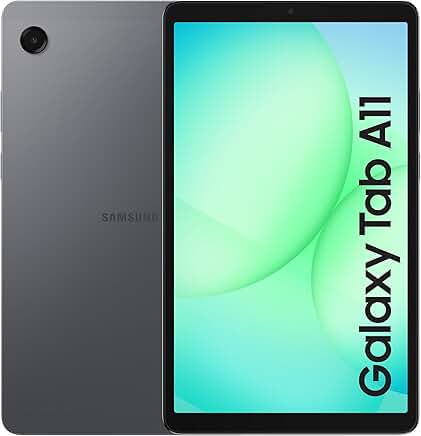
The biggest visible improvement is the display refresh rate. The Galaxy Tab A11 supports 90Hz, compared with the 60Hz screen on the Galaxy Tab A9. This makes scrolling through websites, social media feeds and menus look smoother.
It is a noticeable quality-of-life improvement, particularly if you use your tablet regularly. The A11 also runs Android 15, has a 5,100mAh battery and includes an improved 5MP front-facing camera, compared with the 2MP camera on the A9.
Samsung offers higher-memory configurations, including:
- 4GB RAM and 64GB storage.
- 8GB RAM and 128GB storage.
The latter is the configuration I would consider if you intend to keep the tablet for several years. Having 8GB RAM gives you more flexibility for multitasking and future applications. Storage can also be expanded using a microSD card, with Samsung listing support for cards up to 2TB.
Another advantage is Samsung’s software ecosystem. Smart Switch makes transferring content from another Samsung device straightforward, while Galaxy users will find the interface familiar.
The Galaxy Tab A11 is still an entry-level tablet. Its HD resolution is fairly basic, and the processor is not intended for demanding gaming or intensive productivity. Nevertheless, the combination of 90Hz, expandable storage and an 8GB RAM option makes it a compelling compact Android tablet.
Best for: Anyone wanting a newer Samsung tablet with a smoother display, expandable storage and the option of 8GB RAM.
See Samsung Galaxy Tab A11 on Amazon.
5. HONOR Pad X7: A strong contender for entertainment
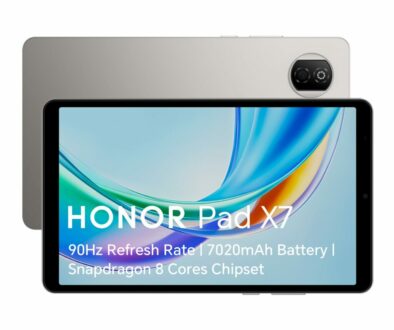
The HONOR Pad X7 is perhaps the most interesting alternative to Samsung in this comparison.
It has an 8.7-inch IPS LCD display with a resolution of 1340 x 800 pixels and a 90Hz refresh rate. Like the Samsung Galaxy Tab A11, this higher refresh rate makes everyday navigation and scrolling feel smoother than on a conventional 60Hz tablet.
However, HONOR has another advantage: battery capacity. The Pad X7 comes with a 7,020mAh battery, considerably larger than the 5,100mAh batteries in the Samsung and Lenovo alternatives. HONOR advertises up to 17 hours of battery life, although actual results will depend on screen brightness, applications and how much video you watch.
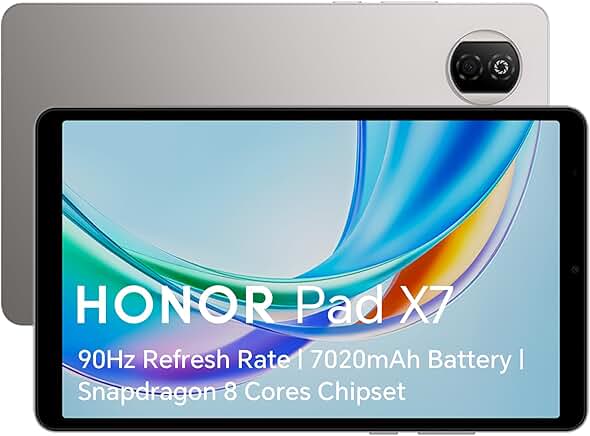
Inside is a Qualcomm Snapdragon 680 processor, an octa-core chip manufactured using a 6nm process. It is paired with 4GB RAM and 128GB storage in the Amazon configuration being considered. The Snapdragon 680 uses four Cortex-A73-based performance cores running at up to 2.4GHz and four Cortex-A53-based efficiency cores. Its Adreno 610 graphics processor handles gaming and other graphics-intensive tasks.
Although the Snapdragon 680 has a higher quoted maximum CPU clock speed than the MediaTek processors, its older CPU architecture means it cannot compete with the Kompanio 540 or Helio G99 in overall processing performance.
It is still suitable for everyday tasks, streaming, reading and casual gaming. The limitation becomes more apparent with demanding applications and heavier multitasking.
Other useful features include:
- 90Hz refresh rate.
- 128GB internal storage.
- Expandable storage using microSD.
- 8MP rear camera.
- 5MP front camera.
- Stereo speakers.
- Eye-comfort features, including low-blue-light and flicker-free certifications.
- Android 15.
The tablet also weighs approximately 365g, making it slightly heavier than the Amazon Alexa Tablet 8 and Samsung Galaxy Tab A11.
One particularly useful feature is its eBook mode, which adjusts the display for reading. This is worth considering if you intend to use a small tablet as an alternative to an e-reader. The large battery, 90Hz screen and 128GB storage make the HONOR Pad X7 an attractive all-round entertainment device.
Best for: Reading, watching films, browsing and everyday use, particularly if battery life is a priority.
See HONOR Pad X7 on Amazon.
Processor performance compared: Kompanio 540 vs Helio G99 and other tablet chips
The processor is one of the most important factors when choosing a small tablet. It determines how quickly applications open, how smoothly websites load, how well the tablet handles multitasking and how much performance is available for games and other demanding applications.
Although all four processors in this comparison have eight CPU cores, the number of cores alone tells us very little about their actual performance. The architecture of those cores, their clock speeds, graphics processor and manufacturing process all matter.
Let’s look at the four processors powering these six tablet configurations.
1. MediaTek Kompanio 540 (MT8189) – Amazon Alexa Tablet 8
The Amazon Alexa Tablet 8 uses the MediaTek Kompanio 540, identified by the model number MT8189.
Its eight CPU cores comprise:
- 2 x ARM Cortex-A78 performance cores running at up to 2.0GHz.
- 6 x ARM Cortex-A55 efficiency cores running at up to 2.0GHz.
It also incorporates an ARM Mali-G57 MC2 graphics processor running at 880MHz.
The interesting feature here is the Cortex-A78 architecture. These are newer performance cores than the Cortex-A76 cores used in the Helio G99. The Amazon tablet therefore has a newer CPU architecture, even though its maximum CPU clock speed is lower.
The Kompanio 540 is manufactured using a 6nm process and supports LPDDR5 memory. Amazon’s implementation includes 4GB or 8GB RAM configurations.
2. MediaTek Helio G99 (MT6789) – Samsung Galaxy Tab A9 and A11
The MediaTek Helio G99 is a popular mid-range processor found in several Android smartphones and tablets.
Its eight CPU cores comprise:
- 2 x ARM Cortex-A76 performance cores running at up to 2.2GHz.
- 6 x ARM Cortex-A55 efficiency cores running at up to 2.0GHz.
Graphics are handled by the Mali-G57 MC2 GPU.
The G99 is manufactured using a 6nm process and remains a capable processor for everyday Android applications, video streaming and casual gaming. Despite its older Cortex-A76 architecture, its higher performance-core clock speed means it remains competitive with newer budget processors.
The Galaxy Tab A9 and A11 both use this same processor. Consequently, choosing the newer A11 does not bring a major chipset upgrade. Its 90Hz screen and higher-memory configuration are more significant improvements.
3. Qualcomm Snapdragon 680 – HONOR Pad X7
The HONOR Pad X7 uses Qualcomm’s Snapdragon 680, an established 6nm processor.
Its CPU configuration is:
- 4 x Kryo 265 Gold cores based on ARM Cortex-A73, running at up to 2.4GHz.
- 4 x Kryo 265 Silver cores based on ARM Cortex-A53, running at up to 1.9GHz.
Graphics are provided by the Adreno 610 GPU.
Although its performance cores have a higher quoted clock speed than the MediaTek processors, they use an older CPU architecture. Clock speed alone does not determine processing performance. The Snapdragon 680 is designed for affordable devices and is suitable for everyday browsing, reading and streaming. It is less suited to demanding games and intensive multitasking.
4. MediaTek Helio G85 – Lenovo Tab One
The Lenovo Tab One uses the MediaTek Helio G85.
Its eight CPU cores comprise:
- 2 x ARM Cortex-A75 performance cores running at up to 2.0GHz.
- 6 x ARM Cortex-A55 efficiency cores running at up to 1.8GHz.
It has a Mali-G52 MC2 graphics processor and is manufactured using a 12nm process.
The Helio G85 is an older budget processor, originally introduced in 2020. Its older CPU architecture and manufacturing process put it behind the other processors in this comparison. It is perfectly adequate for basic tablet activities, but it has the least processing headroom of the four.
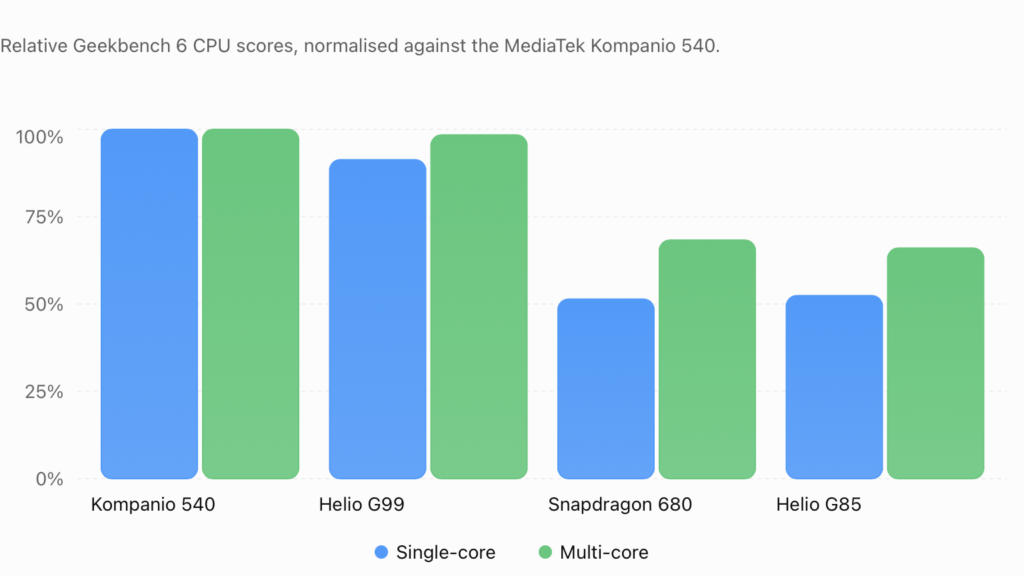
Geekbench 6.7 performance comparison
To make the differences easier to understand, we can use Geekbench 6 CPU benchmark results.
Geekbench measures two aspects of processor performance:
- Single-core performance: How quickly the processor handles tasks that rely heavily on one CPU core. This affects everyday responsiveness and many individual application tasks.
- Multi-core performance: How effectively the processor handles tasks that can use several CPU cores simultaneously. This is particularly relevant to multitasking and demanding applications.
Here are representative Geekbench 6.7.1 results:
|
Processor |
Single-core |
Multi-core |
|
MediaTek Kompanio 540 (Amazon Alexa Tablet 8) |
802 |
2,082 |
|
MediaTek Helio G99 |
725 |
1,964 |
|
MediaTek Helio G85 (Lenovo Tab One) |
409 |
1,434 |
|
Qualcomm Snapdragon 680 |
420 |
1,420 |
Benchmark methodology: The Kompanio 540 figures are from an actual Amazon Alexa Tablet 8 test. The Helio G99 figures are representative chipset averages, while the Helio G85 result is from the Lenovo Tab One and the Snapdragon 680 figures represent typical results from other tested devices. These are not controlled tests of all six tablets under identical conditions.
Sources: Notebookcheck, NanoReview and Geekbench device results
The results reveal something interesting.
The Amazon Alexa Tablet 8 takes the lead in single-core performance. Its score of 802 is around 11% higher than the representative Helio G99 score of 725. Its multi-core score of 2,082 is also ahead of the representative G99 average of 1,964, although the difference is much smaller. This is a particularly impressive result for an affordable tablet. The newer Cortex-A78 architecture gives the Kompanio 540 a measurable CPU advantage.
The Samsung Galaxy Tab A9 and A11 remain close competitors. Actual Helio G99 devices can produce multi-core scores approaching or exceeding the Amazon tablet’s result, depending on the device and testing conditions.
The HONOR Pad X7 and Lenovo Tab One sit considerably further behind. Their processors remain suitable for everyday tablet use, but neither offers the same processing headroom as the Amazon or Samsung alternatives.
For everyday browsing, email and video streaming, these differences may not always be obvious. They become more relevant when running demanding applications, switching between several applications or playing more intensive games.
What about graphics and gaming performance?
CPU benchmarks do not tell the entire story. The graphics processor (GPU) also determines how well a tablet handles games, 3D applications and visually demanding content.
- The Amazon Alexa Tablet 8 and both Samsung tablets use Mali-G57-based graphics, although their GPU clock speeds and implementation differ.
- The Amazon’s Kompanio 540 Mali-G57 MC2 runs at 880MHz, while the Helio G99’s Mali-G57 MC2 is generally clocked at up to 1GHz.
- This gives the G99 a potential graphics advantage, despite the Kompanio 540’s stronger CPU benchmark results.
- The Lenovo Tab One uses the older Mali-G52 MC2, while the HONOR Pad X7 uses Qualcomm’s Adreno 610.
It is therefore important not to interpret the CPU chart as a gaming-performance ranking. Actual gaming results also depend on GPU performance, memory, cooling and software optimisation.
For casual games, all four processors should be adequate. Anyone interested in more demanding 3D games should look beyond CPU benchmark scores before making a purchase.
Does choosing 8GB RAM make a difference?
Two versions of the Amazon Alexa Tablet 8 are available, including a higher-specification model with 8GB RAM and 128GB storage. The Samsung Galaxy Tab A11 also offers an 8GB RAM and 128GB storage configuration.
Choosing 8GB RAM does not make the processor itself faster. Both versions use the same underlying chipset. However, additional memory gives Android more room to keep applications running in the background. This can reduce the need to reload applications when switching between them.
For someone who regularly uses several applications, 8GB RAM is a worthwhile upgrade and may help the tablet remain comfortable to use for longer. The Lenovo Tab One and HONOR Pad X7 are more limited here, with the configurations considered offering 4GB RAM.
Which tablet has the most powerful processor?
Based on the available Geekbench 6.7 CPU results, the Amazon Alexa Tablet 8 with its MediaTek Kompanio 540 takes the lead in the tested single-core and multi-core results.
The Samsung Galaxy Tab A9 and A11, powered by the Helio G99, are close behind. The HONOR Pad X7 and Lenovo Tab One sit further down the ranking.
My processor ranking is therefore:
- Amazon Alexa Tablet 8 – MediaTek Kompanio 540: Best demonstrated CPU performance, particularly in single-core processing.
- Samsung Galaxy Tab A9 / A11 – MediaTek Helio G99: Very competitive performance, with particularly strong multi-core results.
- HONOR Pad X7 – Qualcomm Snapdragon 680: Suitable for everyday use, but a clear step behind the first two.
- Lenovo Tab One – MediaTek Helio G85: The most modest processor in this comparison.
The Amazon tablet’s performance advantage is particularly interesting because the Kompanio 540 is designed for affordable computing devices, yet it delivers competitive results against the Helio G99.
Which tablet has the best specifications?
Looking across the six options, some differences stand out.
Display: HONOR and Samsung A11 have the advantage
All six tablets have the same 1340 x 800 resolution. This means there is no meaningful resolution advantage when comparing them. However, the 90Hz displays on the HONOR Pad X7 and Samsung Galaxy Tab A11 provide smoother scrolling than the 60Hz alternatives.
HONOR also quotes brightness of up to 625 nits in sunlight mode, giving it an advantage for use in brighter environments. The Amazon and Lenovo displays are perfectly adequate for everyday use, but neither offers the same refresh-rate advantage.
Performance: Amazon takes the CPU lead
The Amazon Alexa Tablet 8 has the strongest demonstrated CPU performance, thanks to its Kompanio 540 processor and Cortex-A78 performance cores. The Samsung Galaxy Tab A9 and A11 are close behind, using the well-established Helio G99.
The HONOR Pad X7’s Snapdragon 680 is adequate for everyday applications, while the Lenovo Tab One’s Helio G85 is the least powerful processor here.
RAM is another important consideration. 4GB is adequate for basic tablet use, but 8GB gives you more flexibility when switching between applications. This makes the 8GB Samsung Galaxy Tab A11 and 8GB Amazon configuration worth investigating if their prices are competitive.
Battery: HONOR has the largest capacity
The HONOR Pad X7 has a 7,020mAh battery, compared with 5,100mAh for the Samsung and Lenovo tablets. Amazon advertises up to 14 hours of battery life for its Alexa Tablet 8, while Lenovo quotes up to 12.5 hours of YouTube streaming.
These figures come from different manufacturers’ testing conditions, so they should not be treated as directly comparable results. Nevertheless, HONOR’s larger battery is a useful advantage.
Storage: Check the expansion options
Storage can become a problem surprisingly quickly, particularly if you download films, install games or keep large numbers of photographs on your tablet.
Samsung, Lenovo and HONOR offer microSD expansion.
The Amazon Alexa Tablet 8 does not have a microSD slot, making the 128GB version a more sensible purchase if you intend to store a lot of content locally.
Which small tablet should you buy?
Here is how I would approach the buying decision.
|
Your priority |
My choice |
|
Best measured CPU performance |
Amazon Alexa Tablet 8 |
|
Best compact Samsung tablet |
Galaxy Tab A11 |
|
Best battery capacity |
HONOR Pad X7 |
|
Best everyday entertainment |
HONOR Pad X7 |
|
Best for Amazon Alexa+ |
Amazon Alexa Tablet 8 |
|
Best storage flexibility |
Samsung Galaxy Tab A11 |
|
Best for basic everyday use |
Lenovo Tab One |
|
Cheapest Samsung option |
Galaxy Tab A9, if discounted |
My recommendation
For most people looking for a compact Android tablet, I would narrow the shortlist down to three: the Amazon Alexa Tablet 8, HONOR Pad X7 and Samsung Galaxy Tab A11.
Amazon Alexa Tablet 8: Best for processing performance
The Amazon Alexa Tablet 8 is now a much more interesting proposition following a closer look at its Kompanio 540 processor. Its newer Cortex-A78 CPU architecture delivers the strongest measured single-core performance in this comparison, with competitive multi-core results against Samsung’s Helio G99.
The 8GB RAM and 128GB storage configuration is particularly appealing. However, the lack of microSD expansion means choosing the right storage capacity at the point of purchase is important. If processing power is your priority, this is the tablet I would investigate first.
Samsung Galaxy Tab A11: Best all-round Samsung choice
The Galaxy Tab A11 is the better choice for anyone already using Samsung devices, particularly if you choose the 8GB RAM and 128GB storage version. Its Helio G99 processor remains competitive, while the 90Hz display, expandable storage and Samsung software ecosystem make it a well-rounded option.
The A11 does not offer a major processor upgrade over the older A9, so I would only pay extra if the newer display, memory options and software support justify the price difference.
HONOR Pad X7: Best for entertainment and battery life
The HONOR Pad X7 has a larger battery, 90Hz display and 128GB storage as standard in the version being considered. Its Snapdragon 680 processor is less powerful than the Kompanio 540 and Helio G99, but it is adequate for entertainment, reading and everyday browsing.
If you spend more time watching films, reading eBooks and browsing than running demanding applications, the HONOR remains an attractive option.
What about the Lenovo Tab One and Samsung Galaxy Tab A9?
I would be more cautious about the Lenovo Tab One and older Galaxy Tab A9.
The Lenovo is perfectly usable for basic activities, but its Helio G85 processor, 60Hz screen and limited 4GB RAM configuration make it less compelling alongside newer alternatives. Its remaining security support period is another consideration.
The Galaxy Tab A9 is more capable thanks to its Helio G99 processor, but its 60Hz screen and older design make the A11 a more appealing purchase if the price difference is small.
Ultimately, the price difference will determine the best purchase. If the HONOR or Samsung costs only a little more than the Lenovo, I would spend the extra money on the newer hardware and smoother display.
For anyone comparing all five models, the Amazon Alexa Tablet 8 deserves serious consideration. Its Kompanio 540 processor has changed the performance picture considerably, making it a genuine contender against Samsung’s established Helio G99 tablets.