MacBook Neo vs. Surface Pro 12: Entry level laptop, convertible tablet or AI companion
Microsoft revamps its Surface line, in favour of Snapdragon chips, moving away from low performing processors like Core i3 and Pentium with their entry level tablet. The Surface Pro 12 2025 is a mainstream tablet and with the Surface Keyboard and Slim Pen a perfect combination to go up against any laptop. That position is now being threatened by a new comer, MacBook Neo. Here is how the two entry-level laptops, tablet or AI companions.
Apple and Microsoft have both redefined their entry-level devices in 2026 but with wildly different propositions.
On one side, Apple’s new MacBook Neo (£599) bursts onto the scene as a fanless, iPhone-powered “Mac” that promises all-day battery life and seamless ecosystem magic for less than £600.
On the other, Microsoft’s Surface Pro 12-inch (starting at £700) isn’t a laptop out of the box. It’s a premium tablet built around AI, versatility, and Windows’ Copilot+ experiences.
To turn the Surface Pro 12 into a real productivity machine, you’ll need to spend an extra £249 on the Pro Keyboard with Slim Pen.
So which is the smarter buy in 2026? Let’s break down this high-stakes battle between Apple’s efficiency play and Microsoft’s AI-first convertible.
1. Design & Form Factor: Laptop vs. Convertible
MacBook Neo: A classic clamshell laptop. Ultra-thin, ultra-light (1.23kg), with a sleek aluminium chassis in fun colours like Citrus and Blush aside from Indigo and Silver. It’s designed to be always open, always typing. Users might want a dedicated tablet like the entry level iPad 11 (£329) to compete against the Surface Pro 12 in terms of versatility.
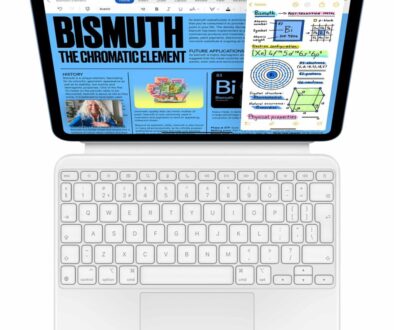
Surface Pro 12: A pure tablet first. At just 879g (without keyboard), it’s significantly lighter and more portable. With its dynamic hinge and detachable keyboard, it transforms from notebook to drawing canvas in seconds. But you pay extra £249 more and you get the full laptop experience.
If you want a ready-to-work laptop straight away, the MacBook Neo wins on price and simplicity. But if you value flexibility, sketching, presenting, reading the Surface Pro offers unmatched versatility… for a steep but infinitely worthwhile add-on cost as it transforms your tablet into a laptop and writing slate.

2. Performance: Old Chip vs. New AI Muscle
This is where things get spicy.
MacBook Neo: Powered by the Apple A18 Pro chip, the same silicon from the iPhone 16 Pro (2024). While incredibly efficient, it’s now two years old and two generations behind Apple’s current M5 chips, even though not in the same class. Still, it delivers smooth performance for everyday tasks, excellent media decoding (ProRes, AV1), and leverages unified memory architecture for macOS optimisation.
Surface Pro 12: Runs on a Snapdragon X Plus (8-core) processor, part of Microsoft’s new wave of Copilot+ PCs. This isn’t just about CPU speed; it’s about dedicated AI acceleration (NPU) enabling real-time features like Recall, Click to Do, and live translation.
At a Glance: Two Different Worlds
These chips are designed for different ecosystems, but their paths are converging as Apple brings its A-series chips to laptops and Qualcomm pushes for Windows on Arm dominance.
| Feature | Apple A18 Pro | Qualcomm Snapdragon X Plus (8-core) | Initial Analysis |
|---|---|---|---|
| Target Devices | Smartphones (iPhone 16 Pro), Budget Laptops (MacBook Neo 2026) | Affordable Windows on Arm Laptops | A18 Pro is (cross-platform), X Plus is dedicated to laptops. |
| Release Date | Q3 2024 (iPhone), Q1 2026 (MacBook) | Q3 2024 | Both launched within the same timeframe. |
| Process Technology | TSMC 3nm (N3E) | 4nm | A18 Pro has a process advantage, enabling better efficiency. |
| CPU Cores | 6 cores (2 performance + 4 efficiency) | 8 cores (all Oryon cores) | X Plus has more physical cores for parallel workloads. |
| CPU Architecture | Hybrid (big.LITTLE) | Normal (8 identical cores) | Different approaches to balancing power and efficiency. |
| Max CPU Clock | 4.04 GHz (P-cores) | 4.00 GHz | Virtually identical peak clocks. |
| GPU Cores | 6-core GPU with hardware ray tracing | Qualcomm Adreno X1 (1.7-2.1 TFLOPS) | A18 Pro GPU is more feature-rich (ray tracing). |
| NPU (AI) Performance | 16-core Neural Engine @ 38 TOPS | Qualcomm Hexagon @ 45 TOPS | X Plus has higher raw AI TOPS, crucial for Copilot+ PC features. |
| Memory Support | LPDDR5X-7500, 8GB max, 60 GB/s bandwidth | LPDDR5X-8448, up to 64GB, 135 GB/s bandwidth | X Plus supports more memory and much higher bandwidth, a clear laptop advantage. |
| TDP (Power) | ~4-12W (scales with device cooling) | 23W (configurable up to 80W) | A18 Pro is far more power-efficient. |

Benchmark Performance Showdown
The numbers tell a fascinating story of trade-offs between single-core prowess and multi-core throughput.
Geekbench 6 CPU Performance
| Benchmark | Apple A18 Pro | Qualcomm Snapdragon X Plus (8-core) | Performance Verdict |
|---|---|---|---|
| Single-Core Score | 3,409 – 3,527 | 2,433 – 2,798 | A18 Pro is ~25-45% faster – a commanding lead in everyday tasks. |
| Multi-Core Score | 8,492 – 9,089 | 11,446 – 11,950 | X Plus is ~30-40% faster – its 8 cores flex their muscles. |
What This Means: The A18 Pro’s individual cores are significantly more powerful (matching or exceeding M3/M4 levels ), making the Neo feel snappier for app loading, web browsing, and document editing. However, the Snapdragon X Plus leverages its two additional cores and higher memory bandwidth to pull ahead in heavily multi-threaded tasks like video exporting, code compilation, or running virtual machines .
Graphics & Gaming Performance
| Metric | Apple A18 Pro | Qualcomm Snapdragon X Plus (8-core) | Analysis |
|---|---|---|---|
| GPU FP32 Performance | ~2,580 GFLOPS | ~2,100 GFLOPS (max) | A18 Pro has ~20% higher theoretical compute. |
| GPU Features | Hardware ray tracing, mesh shading | No hardware ray tracing | A18 Pro supports modern rendering techniques. |
| Gaming Performance | Beats 7-core M1 GPU in many tests | 65-100% faster than Intel Iris Xe | Both are capable; A18 Pro has feature advantage. |
What This Means: The A18 Pro’s GPU is more advanced, supporting hardware-accelerated ray tracing – a feature absent on the X Plus . For students in design, architecture, or gaming, the Neo will handle graphically intensive tasks with more modern rendering capabilities. However, the X Plus still offers respectable performance, significantly outpacing older Intel integrated graphics .

AI & Future-Proofing (Apple Intelligence vs. Copilot+)
This is perhaps the most strategic differentiator.
| Feature | Apple A18 Pro | Qualcomm Snapdragon X Plus (8-core) |
|---|---|---|
| NPU Performance | 38 TOPS | 45 TOPS |
| AI Platform | Apple Intelligence | Microsoft Copilot+ PC |
What This Means: Both chips are built for on-device AI, but they serve different masters. The Snapdragon X Plus’s higher 45 TOPS NPU meets Microsoft’s Copilot+ PC requirements, making it ideal for Windows AI features. The A18 Pro’s 38 TOPS is fully optimised for Apple Intelligence . Both will handle real-time translation, image generation, and system-wide AI tasks, but the ecosystem determines the experience.
Performance Summary
| Category | Winner | Why? |
|---|---|---|
| Single-Core Performance | Apple A18 Pro | ~45% faster in Geekbench 6 single-core – feels snappier daily. |
| Multi-Core Performance | Snapdragon X Plus | ~40% faster in multi-core – better for sustained heavy workloads. |
| Graphics Features | Apple A18 Pro | Hardware ray tracing and superior feature set . |
| AI Capability | Snapdragon X Plus | Higher 45 TOPS NPU meets Copilot+ requirements, but both are class-leading. |
| Memory Support | Snapdragon X Plus | 64GB max, 135 GB/s bandwidth – clear laptop advantage. |
| Power Efficiency | Apple A18 Pro | 3nm process and 4-12W TDP – huge battery life advantage. |
| Ecosystem | Tie | Apple Intelligence vs. Copilot+ PC – choose your OS. |
In short, the A18 Pro is a marvel of efficiency with class-leading single-core speed and modern graphics , making it perfect for students who prioritize battery life and responsiveness. The Snapdragon X Plus is a multi-core beast with superior memory bandwidth, designed for students who need raw throughput for demanding creative or technical workloads on Windows.
Verdict: Raw power? Slight edge to Surface. Efficiency and app optimisation? MacBook Neo shines. But if you care about AI today, Surface Pro is in a league of its own.
Performance Reality Check:
- For web browsing, email, video calls, both feel snappy.
- For creative work, the MacBook Neo handles light photo/video editing well thanks to its ProRes support.
- For AI-driven workflows, the Surface Pro pulls ahead with features like Restyle Image in Photos, AI search, and Microsoft 365 Copilot integration, all running locally for privacy.

3. Battery Life: Tie on Paper, Win for Apple in Practice
Both promise up to 16 hours of local video playback, a testament to ARM-based efficiency.
- MacBook Neo: Achieves this with a smaller 36.5Wh battery, thanks to mature macOS power management and display tuning.
- Surface Pro 12: Matches it, but real-world web browsing drops to ~10 hours.
Verdict: Tie for media use. MacBook Neo may last longer under mixed workloads due to more refined software-hardware integration.
4. Ecosystem & Software: iOS Synergy vs. Windows AI
In this category, comparing macOS to Windows is like comparing Apple and Pear. The age old war of the OS titans continues with these devices. Each holds their own benefits only real world users will appreciate but here are some of the features stand out.
MacBook Neo:
- Full macOS experience
- Seamless iPhone Mirroring — run your iPhone apps directly on the Mac
- Deep Apple Intelligence integration: writing tools, Siri enhancements, privacy-first AI
- Preloaded with iMovie, GarageBand, Keynote, etc.
Surface Pro 12:
- Full Windows 11 with touch-first UI
- Copilot+ PC features:
- Recall (preview): Search everything you’ve seen
- Click to Do: Extract text, copy links, call numbers — instantly
- Restyle Image in Photos: AI-powered image editing
- Microsoft 365 Copilot: In-app AI assistance
- Requires subscription for some AI features
Verdict: If you’re deep in the Apple ecosystem, the MacBook Neo is a no-brainer. But if you want cutting-edge AI tools that actually do things, the Surface Pro is more forward-looking.
5. Ports & Expandability: Minimalism vs. Flexibility
It’s surprising to see MacBook Neo included a 3.5mm headphone jack in keeping with the entire MacBook family from Air to Pro. The Surface Pro on the other hand omits this but comes with much faster USB-C port and special expansion port.
MacBook Neo:
- 1x USB 3 (10Gb/s) – charging, display, data
- 1x USB 2 (slow) – basic peripherals
- 3.5mm headphone jack
- No MagSafe
Surface Pro 12:
- 2x USB-C (both support 40Gbps Thunderbolt 4)
- Surface Connect port
- microSD card reader (huge for creatives)
Verdict: Surface Pro dominates. Dual Thunderbolt ports mean you can daisy-chain monitors, use fast storage, and charge, all without a hub.
6. True Cost: Who’s Actually Cheaper?
Let’s talk real pricing:
| Device | Base Price | + Keyboard & Pen | Total Cost |
| MacBook Neo | £599 | Included (built-in) | £599 |
| Surface Pro 12 | £700 | £249 (Pro Keyboard + Slim Pen) | £949 |
And neither includes a power adapter so tack on another £20–£30 for a 65W USB-C PD charger for the Surface, or 20W for the MacBook Neo.
Verdict: The MacBook Neo is over £350 cheaper when fully equipped. For budget-conscious buyers, this is a massive differentiator.
Value vs Vision
The MacBook Neo is a masterclass in value engineering. For under £600, Apple delivers a silent, lightweight, all-day laptop with solid performance and unmatched iPhone integration. It’s not cutting-edge, but it’s remarkably capable and perfect for students and casual users.
The Surface Pro 12, meanwhile, is a vision of the AI-powered future. It’s more versatile, more innovative, and packed with features that feel like science fiction. But that vision comes at a steep price especially once you add the essential keyboard.
Bottom Line:
If you want the best deal right now, go MacBook Neo.
If you want the future of computing and can afford it go Surface Pro 12.
Just don’t expect either to come with a charger. That ship has sailed.
Real-World Context
Choose the MacBook Neo (A18 Pro) if…
- You value single-core responsiveness for everyday tasks like web browsing, document editing, and app switching.
- You want modern graphics features like ray tracing for gaming or creative work.
- Battery life is paramount – the A18 Pro’s 3nm process and ~4-12W TDP are far more efficient than the X Plus’s 23W baseline.
- You’re invested in the Apple ecosystem and want seamless Apple Intelligence integration.
Choose a Snapdragon X Plus Laptop if…
- Your workflow involves heavily multi-threaded tasks (video editing, 3D rendering, coding) that can leverage 8 cores.
- You need more than 8GB of RAM – the X Plus starts at 16GB and supports up to 64GB .
- You want Windows on Arm with full Copilot+ PC AI capabilities .
- You need to connect multiple high-resolution external displays .